Why do some marketing campaigns work brilliantly while others fail silently? In most cases, the difference comes down to one thing: market research. Too many businesses rely on gut feeling, personal experience, or copied strategies from competitors. The result? Wasted budgets, weak products, and marketing messages that don’t connect.
Market research helps you replace guessing with evidence. It shows you who your customers really are, what problems they are trying to solve, and how your product or service fits into their lives. In this guide, we’ll break market research down in plain language, using real examples and practical steps you can apply immediately—whether you’re a beginner, a small business owner, or a marketer.
What Is Market Research?
Simple Definition of Market Research
Market research is the process of collecting, analyzing, and interpreting information about a market, including customers, competitors, and industry trends, to support better business and marketing decisions.
In simple terms: market research helps you understand before you act.
Instead of asking, “I think customers want this,” market research asks, “What do customers actually want, and why?”
Example:
Imagine you want to open a small coffee shop. Before renting a space, you might ask:
- Who lives or works in this area?
- How often do they drink coffee?
- What price range do they accept?
- Do they prefer take-away or sit-down cafés?
Answering these questions through data, interviews, or observation is market research.
Why Market Research Matters in Marketing & Business
Market research is not just for big corporations with large budgets. In fact, it’s even more important for small businesses because every wrong decision costs more.
Here’s why market research matters:
- Reduces risk: You avoid launching products or campaigns that nobody wants.
- Improves targeting: You know exactly who to speak to and how.
- Saves money: Better decisions mean less wasted ad spend.
- Builds competitive advantage: You understand gaps your competitors ignore.
According to a report by McKinsey, data-driven organizations are significantly more likely to acquire customers and retain them than those relying on intuition alone.
Bottom line: market research turns uncertainty into clarity.
When Do You Need Market Research?
Common Business Situations That Require Research
You don’t need market research only at the beginning of a business. In reality, you should do it whenever you face an important decision.
Typical situations include:
- Launching a new product or service
- Entering a new market or location
- Creating a marketing campaign
- Experiencing declining sales
- Repositioning your brand
Example:
If your Facebook ads suddenly stop converting, market research can help you discover whether:
- Your audience’s needs have changed
- Your competitors are offering better alternatives
- Your message no longer matches customer expectations
Market Research vs Guessing (Mindset Shift)
Many business owners believe they “know their customers” because they are customers themselves. This mindset is dangerous.
Guessing:
“I think customers will like this design.”
Market research:
“7 out of 10 surveyed customers prefer this design because it feels more premium.”
Successful marketing is not about being creative first—it’s about being accurate. Creativity works best when guided by real insight.
Types of Market Research
Primary Market Research
Primary market research involves collecting data directly from your target audience. You control the questions and get fresh, specific insights.
Common primary research methods include:
- Online surveys
- Customer interviews
- Focus groups
- Usability testing
Pros:
- Highly relevant to your business
- Up-to-date information
Cons:
- Time-consuming
- Can cost money if done at scale
Example:
An online shop sends a short survey asking customers why they chose the brand and what almost stopped them from buying.
Secondary Market Research
Secondary market research uses existing data collected by others.
Sources include:
- Industry reports
- Government statistics
- Competitor websites
- Online reviews
Pros:
- Fast and often free
- Great for understanding market size and trends
Cons:
- Data may be outdated
- Not always specific to your niche
You can find reliable secondary data from sources like Statista or government databases.
Qualitative vs Quantitative Research
| Type | Focus | Best Used For |
|---|---|---|
| Qualitative | Opinions, motivations, emotions | Understanding “why” |
| Quantitative | Numbers, statistics | Measuring “how many” |
Example:
Quantitative research tells you that 60% of users abandon your checkout. Qualitative research explains that they feel the process is too complicated.
Market Research Methods (Most Common & Practical)
Surveys & Questionnaires
Surveys are one of the easiest ways to collect data at scale.
Best practices:
- Keep surveys short (5–10 questions)
- Avoid leading questions
- Mix multiple-choice and open-ended questions
Common mistake:
Asking “Do you like our product?” instead of “What do you like or dislike about our product?”
Interviews & Customer Conversations
Customer interviews provide deep insights that numbers alone can’t reveal.
Simple interview questions:
- What problem were you trying to solve?
- What alternatives did you consider?
- What nearly stopped you from buying?
As marketing expert Nielsen Norman Group emphasizes, listening to users directly often reveals usability and messaging issues businesses never expected.
Online & Digital Market Research
Digital tools make market research faster and cheaper than ever.
Popular approaches include:
- Analyzing Google search results
- Reading customer reviews on marketplaces
- Monitoring discussions on social media
These insights help you understand real customer language—useful for SEO, ads, and content.
FAQ: Market Research Basics
What is market research in simple words?
Market research means learning about your customers and market before making business or marketing decisions.
Is market research only for big companies?
No. Small businesses often benefit the most because research helps avoid costly mistakes.
How long does market research take?
It can take from a few days (basic online research) to several weeks (in-depth studies), depending on your goals.
In the next section, we’ll walk through a step-by-step market research process and real-world examples you can apply immediately.
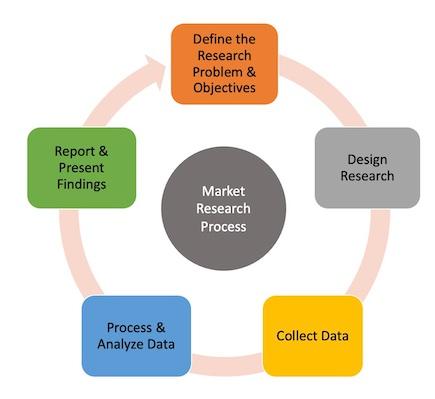
Step-by-Step Market Research Process
Knowing what market research is only solves half the problem. The real value comes from doing it correctly. A clear process helps you avoid random data collection and focus on insights that actually drive decisions.
Step 1 – Define the Research Goal
Every effective market research project starts with a clear goal. Without it, you’ll collect data that looks interesting but leads nowhere.
Bad goal:
“We want to understand our customers better.”
Good goals:
- Identify why customers abandon the checkout page
- Understand what features matter most before launching a new product
- Test whether price or convenience drives buying decisions
Clear goals keep your research focused and measurable.
Step 2 – Identify Target Customers
You cannot research “everyone.” Market research works best when you focus on a specific group.
At minimum, define:
- Age range
- Location
- Job or lifestyle
- Main problem they want to solve
This step connects directly with building a buyer persona, which helps align marketing, content, and sales.
Step 3 – Choose Research Methods
Not every method fits every goal.
| Goal | Best Method |
|---|---|
| Understand motivations | Interviews |
| Measure demand | Surveys |
| Track trends | Secondary research |
Small businesses often combine one primary method with secondary data for efficiency.
Step 4 – Collect Data
Data collection should be systematic, not rushed.
Tips from real-world experience:
- Test your survey before sending it widely
- Record interviews (with permission)
- Document insights immediately
According to Pew Research Center, data quality matters more than sample size when insights are used for decision-making.
Step 5 – Analyze & Interpret Insights
Data alone is not insight.
Ask questions like:
- What patterns keep repeating?
- What surprised us?
- What pain points appear most often?
Insight example:
Instead of “Customers complain about price,” a real insight would be “Customers are willing to pay more if delivery is faster.”
Step 6 – Turn Research into Action
The biggest market research mistake is stopping at analysis.
Insights should lead to action, such as:
- Adjusting product features
- Changing ad messaging
- Improving onboarding or checkout flow
Market research only creates value when it influences real decisions.
Market Research Examples (Real & Practical)
Example 1 – Market Research for an Online Shop
An online fashion store noticed high traffic but low conversion rates.
They conducted:
- Exit surveys
- Review analysis
- Competitor comparison
Insight:
Customers wanted clearer size guides and real photos.
Result:
After updating product pages, conversions increased without increasing ad spend.
Example 2 – Market Research for a New Product Launch
A startup planned to launch a productivity app.
Instead of building everything first, they interviewed 20 potential users.
Key finding:
Users cared more about simplicity than advanced features.
This insight saved months of development and aligned the product with real demand.
Example 3 – Market Research for Content & Ads
A marketing team analyzed search queries and customer comments.
They discovered customers used different language than the brand.
By updating ad copy and blog content to match real customer words, engagement improved significantly. This approach supports both SEO and paid media strategies.
Market Research Tools (Free & Paid)
Free Market Research Tools
- Google Forms – surveys
- Google Trends – demand analysis
- Social media polls
- Online reviews and forums
These tools are often enough for small businesses starting market research.
Paid & Advanced Tools
- Survey platforms with advanced logic
- Heatmap and user behavior tools
- Industry research databases
As marketing expert Neil Patel once said, “Tools don’t replace thinking—but they speed it up.”
Common Market Research Mistakes (And How to Avoid Them)
Asking the Wrong Questions
Leading questions produce biased answers. Always stay neutral.
Relying on Small or Biased Samples
Interviewing only loyal customers hides real problems.
Ignoring Qualitative Insights
Numbers show what happens. Conversations explain why.
Not Acting on Research Results
Research without execution wastes time and money.
Market Research for Small Business & SME
Lean Market Research Framework
For small teams, market research should be:
- Fast
- Affordable
- Action-focused
A simple framework:
- Define one clear question
- Use one primary method
- Validate with secondary data
Minimum Research You Must Do Before Marketing
- Understand top 3 customer pain points
- Know key competitors
- Validate price expectations
This foundation supports a stronger digital marketing strategy.
Market Research vs Market Analysis
| Aspect | Market Research | Market Analysis |
|---|---|---|
| Focus | Collecting data | Interpreting data |
| Timing | Before decisions | After data collection |
Both work together. Research feeds analysis.
FAQ – Market Research Questions
How much does market research cost?
It can be free (manual research) or costly, depending on scale and tools.
Can I do market research without a big team?
Yes. Many solo founders run effective research using interviews and surveys.
How often should market research be done?
Ideally before major decisions and regularly as markets change.
Summary & Key Takeaways
Market research is not about complexity—it’s about clarity.
- It replaces assumptions with evidence
- It reduces marketing risk
- It improves product-market fit
Whether you’re launching a product, running ads, or planning content, market research gives you a competitive edge.
Author note: This article is written by a digital marketing practitioner with hands-on experience conducting market research for SMEs, e-commerce brands, and content-driven websites.
If you want to go deeper, explore related guides on customer journey and competitive analysis to strengthen your marketing foundation.