In today’s fast-paced digital world, marketers are continuously looking for ways to drive results while optimizing their budgets. Performance marketing has emerged as one of the most effective ways to achieve measurable outcomes, offering businesses the opportunity to pay only for actual results. Whether you’re a small business owner or an experienced marketer, understanding performance marketing is crucial to staying ahead in the competitive landscape. But what exactly is performance marketing, and how can it work for your brand?
This comprehensive guide will walk you through everything you need to know about performance marketing—from its definition and the various types of campaigns to practical tips for building an effective strategy. By the end of this article, you’ll have a solid understanding of how performance marketing can be a game-changer for your business.
What is Performance Marketing?
Definition and Overview
Performance marketing refers to a type of digital marketing strategy where advertisers pay based on the results of their campaigns. In other words, you only pay when specific actions are completed—whether that’s a click, lead, or sale. This model stands in contrast to traditional advertising, where businesses pay for ad placements regardless of whether the ad generates any meaningful outcome.
Performance marketing is highly measurable, as it revolves around key performance indicators (KPIs) that allow advertisers to track and optimize their campaigns. It’s a highly effective way to ensure that your marketing budget is used efficiently, as you’re essentially paying for outcomes, not just exposure.
Key Elements of Performance Marketing
- ROI (Return on Investment): Performance marketing is directly tied to the ROI of your campaigns. By tracking the cost and comparing it to the revenue generated, you can assess whether your marketing efforts are delivering value.
- KPIs (Key Performance Indicators): KPIs like conversion rate, click-through rate (CTR), and cost per acquisition (CPA) are the metrics used to measure the success of performance marketing campaigns.
- Performance-Based Pricing Models: Common pricing models in performance marketing include Cost Per Click (CPC), Cost Per Acquisition (CPA), and Cost Per Lead (CPL). These models ensure that businesses only pay for specific results.
Historical Context of Performance Marketing
Performance marketing has evolved significantly over the years. Initially, it was limited to direct response advertising, where businesses measured success based on immediate responses like purchases or sign-ups. Over time, platforms like Google Ads, Facebook Ads, and affiliate networks have made performance marketing more accessible and data-driven, allowing businesses to fine-tune their campaigns in real-time.
In recent years, the rise of programmatic advertising and the shift toward more data-driven marketing strategies have accelerated the growth of performance marketing. Today, it’s one of the most efficient ways to reach and engage customers, with billions of dollars being spent on performance-based advertising each year.
How Performance Marketing Works
The Process of Performance-Based Advertising
Performance marketing operates through a simple yet effective process. It begins with creating an ad campaign on a platform like Google Ads or Facebook Ads. From there, you define your desired outcome—such as a click, lead, or sale—and set a pricing model that aligns with that outcome (CPC, CPA, etc.).
Once your campaign is live, the platform uses algorithms to display your ads to a targeted audience based on demographics, interests, and behaviors. After the user interacts with the ad and completes the desired action, the platform charges you based on the established pricing model.
Here’s a breakdown of the typical performance marketing cycle:
- Create a campaign with a clear goal (e.g., sales, lead generation).
- Choose a platform that aligns with your audience (Google, Facebook, affiliate networks, etc.).
- Set your budget, bid strategy, and performance metrics (e.g., cost per click, cost per lead).
- Launch your campaign and track real-time performance.
- Analyze results and optimize your campaign for better outcomes.
Key Performance Metrics to Track
To evaluate the success of your performance marketing campaigns, it’s essential to track key performance metrics. Here are the most common ones:
- Click-Through Rate (CTR): The percentage of people who click on your ad compared to how many saw it. A high CTR typically means your ad is relevant to your audience.
- Conversion Rate: The percentage of people who complete the desired action after clicking your ad. This metric is critical for assessing the effectiveness of your campaign.
- Cost Per Acquisition (CPA): The cost of acquiring a customer through your campaign. This metric helps determine whether your advertising efforts are cost-effective.
- Return on Ad Spend (ROAS): A measure of how much revenue is generated for every dollar spent on advertising. A higher ROAS indicates a more successful campaign.
By tracking these metrics, you can optimize your campaigns to reduce wasteful spending and improve overall performance.
Performance Marketing Pricing Models
There are several pricing models used in performance marketing. Choosing the right model depends on your campaign goals and the type of action you want to achieve. Below are the most common performance marketing pricing models:
- Cost Per Click (CPC): Advertisers pay each time a user clicks on their ad. This model is best for driving traffic to your website.
- Cost Per Acquisition (CPA): Advertisers pay when a user completes a specific action, such as making a purchase or signing up for a service. This model is ideal for lead generation and sales-driven campaigns.
- Cost Per Lead (CPL): Advertisers pay when a user submits their contact information (e.g., email address, phone number). This is commonly used for B2B and service-based businesses.
- Affiliate Marketing: Businesses partner with affiliates who promote their products and earn a commission for each sale or lead generated. This model works well for businesses looking to scale their sales without upfront costs.
Types of Performance Marketing Campaigns
Affiliate Marketing
Affiliate marketing is a performance-based marketing strategy where businesses partner with affiliates who promote their products or services in exchange for a commission on each sale or lead generated. Affiliates typically use their websites, blogs, or social media channels to drive traffic to the business’s website.
One of the key benefits of affiliate marketing is that businesses only pay for results, which makes it a highly cost-effective strategy. However, managing affiliates and tracking sales can be challenging without the right tools and platforms.
Real-world example: Amazon Associates, one of the most well-known affiliate programs, allows affiliates to promote Amazon products and earn commissions on sales. Many bloggers and influencers rely on affiliate marketing as a primary revenue stream.
Programmatic Advertising
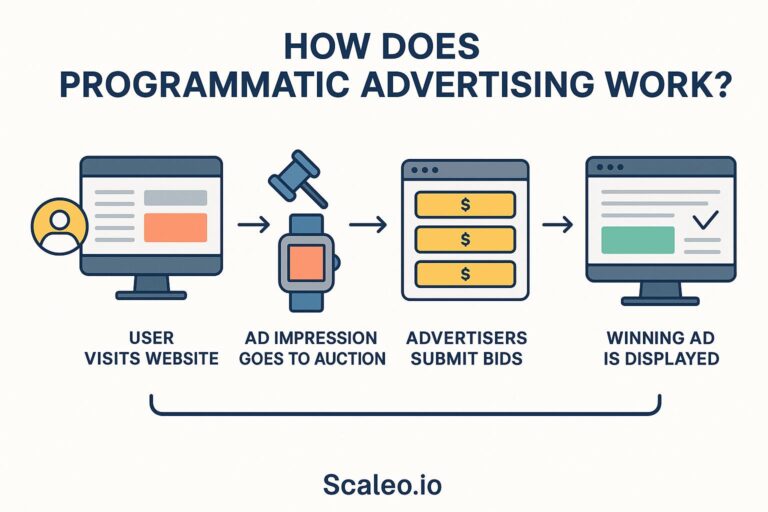
Programmatic advertising refers to the automated process of buying and selling ad inventory in real-time using technology. It leverages data and algorithms to optimize ad placements and target the right audience at the right time.
Unlike traditional advertising, which involves human negotiations and manual placements, programmatic advertising streamlines the process by automating the ad buying process, resulting in more efficient campaigns. It’s particularly useful for advertisers who want to scale their campaigns while maintaining precise targeting.
Programmatic advertising platforms, such as The Trade Desk or Google Display Network, allow businesses to run display ads across a wide network of websites and track performance in real-time.
Influencer Marketing in a Performance Marketing Context
Influencer marketing has become an essential part of many performance marketing strategies. It involves partnering with influencers—individuals who have a significant following on platforms like Instagram, YouTube, or TikTok—to promote your products or services.
In the context of performance marketing, influencer campaigns are structured to track specific outcomes, such as product sales, website visits, or sign-ups. Unlike traditional influencer marketing, which may focus on brand awareness, performance-based influencer marketing ensures that you’re only paying for tangible results.
Example: A fashion brand may partner with an influencer to promote a new product, and the influencer will receive a commission for every sale generated through their unique affiliate link.
Display Advertising and Retargeting
Display advertising involves placing banner ads, images, or videos on websites across the internet. These ads can be targeted to specific audiences based on their interests, behavior, and demographics.
Retargeting is a subset of display advertising that focuses on re-engaging visitors who have previously interacted with your website but didn’t convert. By showing ads to these visitors, businesses can remind them of their products or services, increasing the likelihood of a conversion.
For example, if a customer views a product on an e-commerce site but doesn’t make a purchase, they may see retargeted ads for that product on other websites they visit, encouraging them to complete their purchase.

Benefits of Performance Marketing
Cost Efficiency and Flexibility
One of the key benefits of performance marketing is its inherent cost efficiency. Unlike traditional advertising models, where you pay for exposure regardless of the outcome, performance marketing allows you to pay only for the results. Whether it’s a click, a lead, or a sale, you are essentially paying for the action that directly contributes to your business objectives.
This performance-based model gives businesses more flexibility in managing their marketing budgets. With tools to track performance in real-time, you can allocate resources more efficiently by investing in campaigns that are generating the best returns. Furthermore, you can scale successful campaigns and pause or optimize underperforming ones, ensuring that every dollar spent works harder for your business.
Measurable Results and Transparency
Another significant advantage of performance marketing is its transparency. Since the model is based on measurable actions, businesses can see exactly how their marketing budget is being spent and the returns it’s generating. This level of transparency provides a clearer picture of how different strategies and channels contribute to your marketing goals.
With tools like Google Analytics and other performance tracking platforms, businesses can monitor campaigns in real time, allowing them to make informed decisions on the fly. This data-driven approach ensures that businesses can continuously optimize their marketing efforts for maximum impact.
Improved ROI
Ultimately, the main goal of performance marketing is to drive a higher return on investment (ROI). Because you’re only paying for measurable results, performance marketing tends to deliver a better ROI compared to traditional advertising. By optimizing for conversions and focusing on specific goals, businesses can achieve more efficient ad spending, turning every marketing dollar into a profitable outcome.
In fact, studies have shown that businesses using performance marketing strategies can see up to a 30% increase in ROI compared to traditional methods. With the right strategy in place, performance marketing can be a major driver of growth for your business.
Challenges in Performance Marketing
Over-reliance on Metrics
While performance marketing offers significant advantages, one challenge that businesses often face is the over-reliance on metrics. In the rush to optimize campaigns for KPIs such as clicks or conversions, businesses might miss the bigger picture—brand building and customer loyalty.
Performance marketing is heavily focused on short-term outcomes, but long-term customer engagement and brand awareness should also be part of the strategy. Neglecting these aspects can hinder the long-term growth of the brand, even if the short-term results look promising.
High Competition in the Digital Space
As more businesses embrace performance marketing, the digital space becomes increasingly competitive. Whether you’re bidding for clicks on Google Ads or partnering with influencers, standing out in a crowded marketplace can be challenging.
To succeed, businesses need to differentiate themselves through creative and compelling ad campaigns. This could mean offering unique value propositions, targeting niche audiences, or experimenting with new ad formats and channels. Businesses that don’t stay ahead of trends or fail to innovate may struggle to capture their audience’s attention.
Data Privacy and Tracking Challenges
With the growing concern over data privacy, performance marketers must navigate the complexities of complying with regulations like GDPR and CCPA. These privacy laws affect how data can be collected, stored, and used for advertising purposes.
For example, cookies and tracking pixels, which are essential tools for performance marketing, can be blocked by web browsers or restricted by legislation. This makes it harder to track user behavior and optimize campaigns. Marketers must stay updated on the latest privacy laws and adjust their tracking and data collection practices accordingly to avoid penalties.
How to Create a Successful Performance Marketing Strategy
Define Your Goals and KPIs
The first step in creating a successful performance marketing strategy is to define your goals clearly. Are you looking to drive sales, generate leads, or increase brand awareness? Identifying these objectives will help you set the right KPIs and choose the most appropriate channels for your campaign.
Once your goals are defined, establish specific KPIs to track progress. For example, if your goal is to increase sales, your KPIs might include metrics like conversion rate, cost per acquisition (CPA), and return on ad spend (ROAS). These metrics will guide your decision-making throughout the campaign.
Select the Right Performance Marketing Channels
Choosing the right channels is critical for the success of your performance marketing strategy. Common channels include Google Ads, Facebook Ads, affiliate marketing, and influencer partnerships. Each channel offers unique advantages depending on your business goals and target audience.
For example, Google Ads is ideal for targeting users with high intent, as people often search for specific products or services when they’re ready to make a purchase. On the other hand, Facebook Ads are great for reaching broader audiences and targeting users based on demographics and interests.
Consider your business objectives and where your target audience spends their time online to select the most effective channels for your campaign.
Develop Targeted Ads and Offers
Creating compelling ads and offers is crucial for converting your audience into customers. Ensure that your ads are relevant, visually appealing, and speak to the needs of your target market. Personalization is key—tailor your messaging to the specific pain points and desires of your audience.
For example, if you’re running a promotional campaign for a limited-time discount, highlight the urgency in your ad copy to encourage immediate action. Clear call-to-action (CTA) buttons like “Shop Now” or “Sign Up” will help guide users through the conversion process.
Optimize for Conversions
Conversion rate optimization (CRO) is an ongoing process in performance marketing. It’s not enough to drive traffic to your website; you need to ensure that visitors take the desired actions once they arrive. A/B testing is a great way to test different versions of your ads, landing pages, and offers to see which ones perform best.
Small changes—such as adjusting your CTA button text or tweaking the design of your landing page—can make a big difference in conversion rates. Keep experimenting and optimizing your campaigns to maximize results.
Monitor and Adjust Campaigns
Performance marketing is not a “set it and forget it” type of strategy. Regular monitoring and adjustments are necessary to ensure your campaigns stay on track. Use real-time data to assess your performance, and make adjustments as needed to improve results.
For example, if you notice that one ad group is outperforming others, you can allocate more budget to that group. If certain keywords aren’t driving conversions, you can pause them or replace them with more relevant ones.
Tools and Platforms for Performance Marketing
Google Ads
Google Ads is one of the most popular platforms for performance marketing. It offers a range of targeting options and bidding strategies, making it an excellent choice for businesses of all sizes. Google Ads allows you to create ads that appear in search results, display ads on websites, and even run video ads on YouTube.
Facebook Ads
Facebook Ads is another powerful platform for performance marketing, especially for businesses looking to reach a broad audience. With Facebook’s robust targeting capabilities, you can create highly targeted campaigns based on factors such as age, location, interests, and behavior.
Affiliate Networks and Tracking Tools
Affiliate marketing platforms like ShareASale and Commission Junction allow businesses to partner with affiliates and track performance in real-time. These networks provide businesses with access to a wide range of affiliates and give them the ability to monitor sales and commissions through their tracking systems.
Conclusion: Mastering Performance Marketing for Business Growth
Performance marketing has proven to be one of the most effective and cost-efficient strategies for businesses looking to drive measurable results. By paying for specific actions and focusing on key metrics like ROI, businesses can ensure that their marketing budgets are being used effectively.
While the landscape can be competitive and challenging, the flexibility, transparency, and optimization opportunities provided by performance marketing make it an invaluable tool for any modern marketer. By defining clear goals, selecting the right channels, and continuously optimizing campaigns, businesses can significantly improve their marketing outcomes and drive sustainable growth.
FAQ
What is the difference between performance marketing and traditional advertising?
In traditional advertising, businesses pay for ad placements regardless of whether the ad leads to a desired action. In contrast, performance marketing requires businesses to pay only when a specific outcome, such as a click, lead, or sale, is achieved. This makes performance marketing more cost-effective and results-oriented.
Can performance marketing work for small businesses?
Yes, performance marketing is particularly beneficial for small businesses because it allows them to optimize their ad spend and only pay for results. With the right strategies and tools, small businesses can compete effectively with larger companies in the digital space.
How do I measure success in performance marketing?
The success of a performance marketing campaign can be measured using various metrics, such as click-through rate (CTR), conversion rate, cost per acquisition (CPA), and return on ad spend (ROAS). By tracking these metrics, you can assess how well your campaigns are performing and make adjustments to improve results.